An Evening of Poetry and Spiritual Chanting in Ottawa
Article by: Jelena Mitric, Secretary of the Saint Stefan Church Choir in Ottawa
Translation by: Djuradj Vujcic
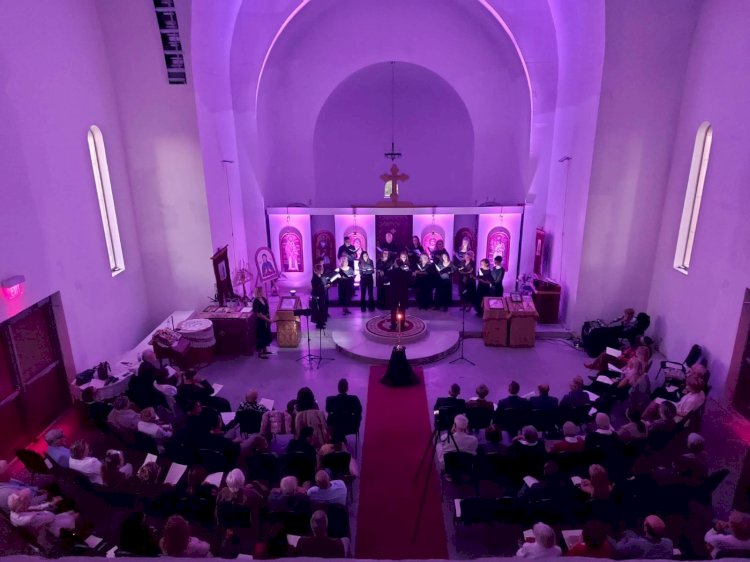
An evening of poetry by Tatjana Vreco and spiritual chanting by the choir of Saint Stefan Church in Ottawa
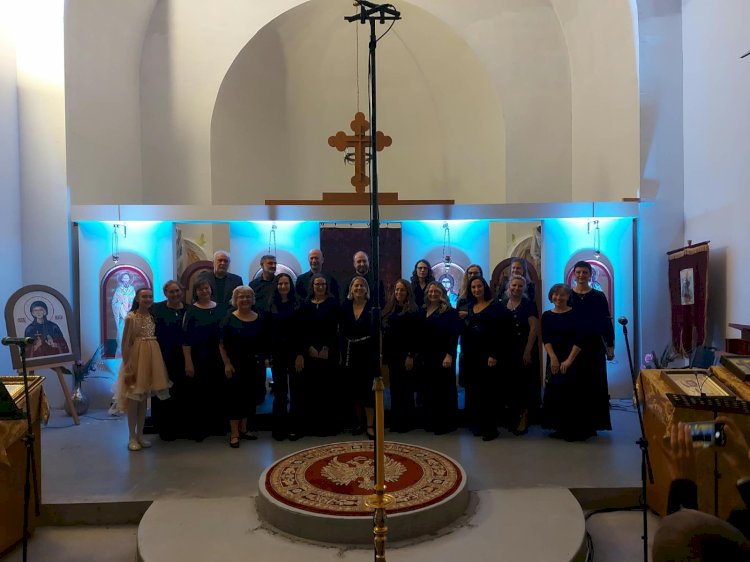
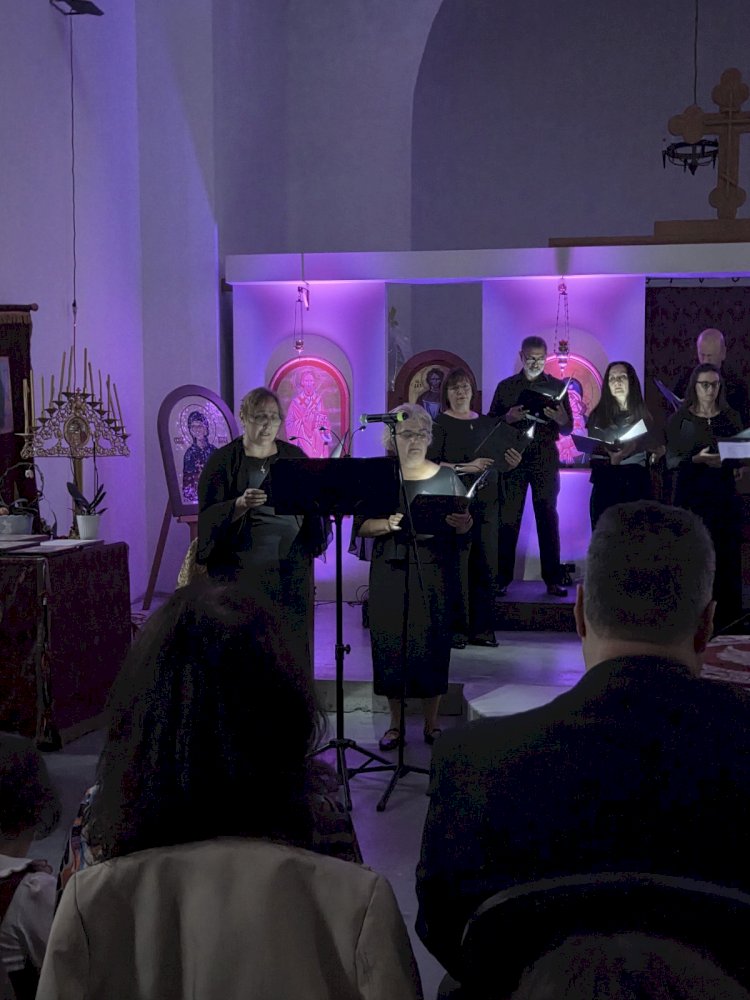
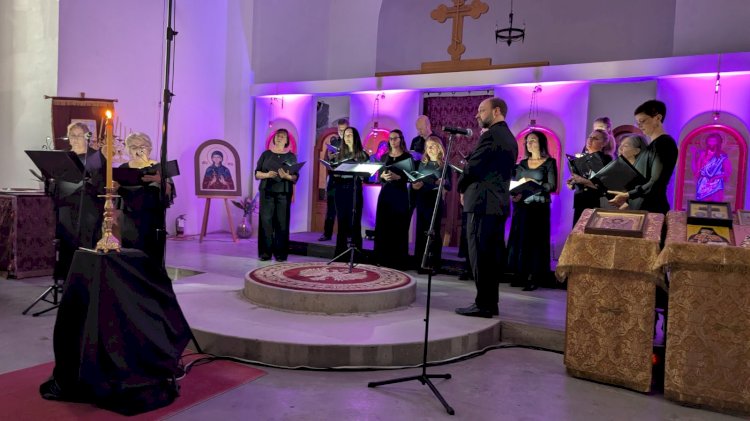
On October 3, 2026, a spiritual and cultural evening entitled “Evening of Poetry and Chant” was held at Saint Stefan Church in Ottawa, dedicated to the poetic work of Tatjana Vreco and the spiritual chanting of the Saint Stefan Church Choir in Ottawa. This gathering, imbued with Orthodox spirituality, patriotism, and the beauty of artistic expression, united poetic words and spiritual music into a unique testimony of faith, love, and hope.
Addressing the audience, Tatjana Vreco shared a personal testimony about the spiritual roots of her work, recalling the words of her grandmother that left a deep mark on her heart even in her childhood:
“Everything is God’s providence,” my grandmother said as she would make the sign of the cross in front of the icon of Saint George. I was a little girl who did not fully understand her words, but they remained deeply engraved in me. I did not know then that with those words she had sown a seed of spirituality in my heart, which grew in me, matured, and guided me through life. And this night is for me an act of His goodness and love. My encounter and collaboration with the choir of Saint Stefan Church are nothing other than His grace and gift, for which I am immensely grateful to Him.”
These words most beautifully revealed the spiritual thread that permeated the entire evening – the faith inherited in the family, which matures in a person and becomes the foundation of their life's journey and creative expression.
A special touch to the beginning of the program was given by Jennifer Dubelsten, who performed the song Ti si sve u mome svemu (You are all in my everything) in Serbian. Although she does not speak Serbian, her inspired performance showed that the beauty of a spiritual message transcends the boundaries of language. The lighting of a candle at the end of the performance had a special symbolism – a reminder of the light of God that illuminates a person’s path.
The evening brought together numerous lovers of poetry and spiritual music, including representatives of the Embassy of the Republic of Serbia and the Embassy of the Russian Federation, led by Ambassador Oleg V. Stepanov.
The audience had the opportunity to hear ten songs from Tatjana Vreco’s collection Najlepsi bozur u utrobi raste (The Most Beautiful Peony Grows in the Womb), while the choir of the Saint Stefan Church, under the conductorship of Maestro Ilija Dubelsten, performed five spiritual compositions. In this encounter of poetry and spiritual chanting, the poetic word opened up a space for personal reflection, memory and spiritual longing, while the choral music gave the verses new depth, elevating them towards a prayerful experience.
The symbolism of the peony, deeply rooted in Serbian historical and spiritual memory, refers to suffering, sacrifice, hope and renewal. It was precisely these themes, recognizable in the Orthodox spiritual tradition, that represented one of the main links between poetic creativity and church singing. Thus, personal lyrical confession and congregational musical expression united in a testimony to the timeless values of faith and spiritual heritage.
The finale of the evening was given special power by the Pobedna pesma (Victory Song) by the Holy Bishop Nikolaj Velimirovic, whose performance also incorporated poetic images from the poem Pepeo (Ashes). The memory of her grandmother in prayer before the icon of Saint George once again connected the end of the program with its spiritual beginning. The final stanza was performed by a girl, Lena Trninic, whose solo interpretation, accompanied by the symbolic extinguishing of a candle, rounded off this special evening.
This gathering showed that poetry and spiritual singing, imbued with the same striving for beauty, truth, and spirituality, can become a unique expression of a person’s faith and inner world. At the same time, it testified to the importance of the church community as a place where, in addition to the life of worship, the Serbian language, culture, art, and spiritual heritage are preserved and nurtured.
At a time when preserving spiritual and national identity is one of the important tasks of the Serbian people in the diaspora, such meetings represent a valuable contribution to unity and connecting generations – because faith, song and poetry remain living witnesses of the spiritual roots that connect man with God, his people and homeland.