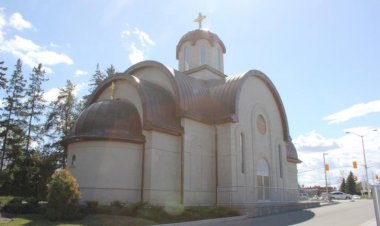
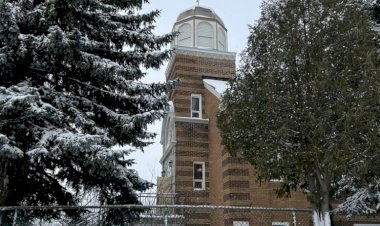
Holy Trinity Church, Regina
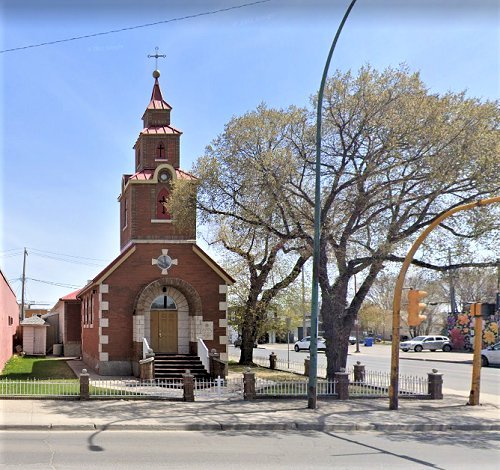
Holy Trinity Church, Regina
Address: 928 11th Avenue, Regina, Saskatchewan, S4N 0KL
Email address: sekretarsvetatrojica@gmail.com
Priest: Fr. Obrad Filipovic (administrator; 403 244 3586 / protaobrad@gmail.com)
History
The beginnings and establishment of a Church and School Congregation
The Serbian people who lived under Austro-Hungarian rule, eager for freedom and a better life, set off to various parts of the world. The first Serbs immigrated to Saskatchewan, namely Regina, around 1900. They were mostly from Banat. In addition to Regina, they also lived in surrounding places such as McCraney (between Kenaston and Bladworth), Truax, Avonlea and Claybank. A certain part of the settlers remained in Regina, and many left in search of work and a better climate. The first written traces of Serbs in Saskatchewan relate to work on the religious and national level and are recorded in the minutes of the sessions of the governing boards of regular and extraordinary assemblies.
Taught by the experience of living under foreign rule and knowing that faith and nation can only be preserved through the Church, the Serbian people in Regina, on June 8, 1912, held their first session, attended by 44 people. On that day, they founded the Serbian Eastern Orthodox Church Municipality and elected a three-person committee: president Milic Jovanovic, treasurer Stevan Maksimovic, and note-taker Dimitrije Kostic. Sessions were held in homes because they had no other space. Later, when membership increased, they rented one of the existing local halls. One of these rooms was a building called the Sunday School, which was located on the site of the later Serbian Club. At the sessions, after discussing the items on the agenda, they always began collecting voluntary contributions for the construction of a future holy temple. At the end of each session, the board and members agreed on the place and time of the next session. The minutes of the sessions at that time tell of the efforts that people of that time made to bring church life to life. At that time, the Serbian people worked the hardest jobs for low wages that were not even enough for a normal everyday life. In addition, at that time, a Serbian diocese had not yet been established on the territory of North America. But despite poverty and other difficulties, the Serbian people managed to collect part of the funds for the construction of a holy temple.
Construction of the church and the service of Russian priests
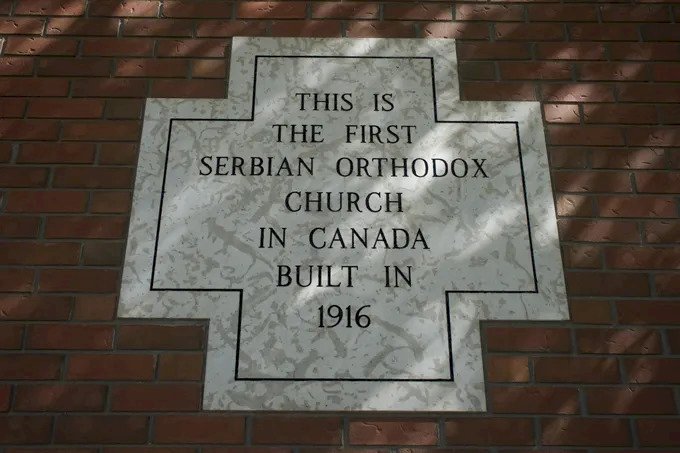
At that time, the Russian Church had its bishop in Winnipeg, Manitoba. There were Russians in Regina at the time, but significantly fewer than Serbs. It is true that they did not have a church either. The Church and School Board scheduled an extraordinary assembly for December 7, 1915, to discuss how to unite with the Russians and build a joint place of worship. That day, 29 members voted in favour of the idea of building a church together with the Russians, so the Russians scheduled a session at which they agreed to unity, but with the proviso that the church be called Russian–Serbian. The Serbs did not agree to this, but decided to build a church themselves. As they said, so they did. Stevan and Sava Djurisic donated a plot of land in the eastern part of the city, in the 17th block of McAra Street, on which the future church would be built. It should be noted that other families also contributed to this great undertaking. These families were: Inic, Jakovljev, Skerletov, Maksimovic, Knezevic, Petrov, Velemirov, Trifunov, Milanov, Matic, Stojadinov, Erdeljan and others. They reached an agreement with a master builder to build a church on McAra Street for $70. On March 25, 1916, they paid him $40, and the remaining $30 was to be paid on August 7 of the same year. The church was consecrated on May 14, 1916, and the act of consecration was most likely performed by a Russian priest. On May 21, 1916, the assembly of members decided to send a request to the Russian Consistory in New York to accept the Serbian church in Regina under its auspices, with the right to join the Serbian Church when a Serbian diocese is established in that area. A request was also sent to the Russian bishop to assign a priest to the church. A salary of $15 per month and an apartment were offered. At this meeting, it was also decided that each member of the church would be obliged to give fifty cents per month for the maintenance of the new church and the priest.
Time passed and priests, presidents and administrations changed. There were also periods when the church did not have its own priest, and everything depended on the material resources at its disposal. The main income for the maintenance of the church was collected through voluntary contributions, the sale of candles from the polijelej (chandelier), and from the sale of tables at various events. In 1924, a mandatory parochial fee was introduced. It was difficult for the Serbian people that the church could not be open every Sunday and on holidays. Therefore, on January 12, 1929, an assembly of members of the Church and School Congregation was convened to discuss the possibility of appointing a permanent priest. In order to realize this, it was necessary to include the entire Serbian population in Regina in the action. Therefore, a decision was made to contact all Serbs in the city in writing with a fraternal request to fulfill their obligations, i.e. parochial fee, pay regularly and in advance and come to all services in as many numbers as possible. At the session on March 3, 1929, in the presence of the priest, Fr. Jerosim, it was decided to accept this priest as a permanent parish priest.
Establishment of the Serbian Club and moving the church to a new location
The Serbian Club in Regina was founded in 1931. The first president of the club was Milivoj Ristic. Church and club affairs were carried out by the same board, which consisted of: president, vice-president, treasurer, two councilors and the church elder, who was, in fact, the president of the Church and School Board. The club purchased two plots of land, eighteen blocks away from the church, on 11th Avenue (at the corner of Winnipeg Street). The minutes of January 13, 1933 show that a decision was made to consecrate this land on January 15 and to immediately, on January 16, begin preparations for moving the church from McAra Street. Krsta Knezevic and Milan Skerletov were in charge of this work. The land to which the church was moved was owned by the Serbian Club, and by a decision of May 25, 1933, it was transferred to the church. At the end of 1933, a small building was purchased from the hospital and moved to the land next to the church. The building was later expanded so that it could be used as a church hall. There are no written records from 1933 to 1947. Services were held in the church on church feast days and major holidays. Priests from sister Orthodox churches officiated. That the church was occasionally opened during that period and that the Serbian people maintained a connection with the old region throughout all those years is evidenced by the dedication on a polijelej (chandelier) from that time: “the good-natured Serbian people to the Yugoslav King Alexander I, 1935”.
Without a permanent priest (1949–1983)
On September 24, 1947, an extraordinary assembly of the members of the Regina church was held to resolve the issue of the priest. It was agreed that they would address the Serbian bishop in Libertyville. The result of constant correspondence with Bishop Dionisije was the appointment of a priest, Fr. Nikanor Palic, at the end of that year, as evidenced by the minutes of January 1, 1948, which show that this priest also attended the session. Fr. Nikanor Palic was the parish priest of Regina until May 29, 1950. He resigned, most likely for health reasons, on September 11, 1949. The board accepted the resignation on the condition that he remain in the parish until the bishop appoints another priest. Contact with the American–Canadian bishop was re-established. He informed the administration in Regina that he had a priest for this colony. Thus, on May 29, 1950, Regina received a priest, Fr. Mitrofan Kresojevic. Fr. Mitrofan remained in the parish for two years, and at the session on April 13, 1952, he informed the assembly that he was leaving Regina because the Canadian authorities would not allow him to remain in Canada. He then proposed that he be succeeded by Fr. Shevchenko, who was coming to Libertyville from Yugoslavia. The assembly accepted this proposal, with the proviso that the new priest first come to Regina to get to know him. The minutes of the assembly of May 1, 1952 show that Fr. Shevchenko was in Regina, but that the assembly could not make a decision on his appointment, because only 22 of the 47 members were present. The assembly was postponed to May 11, 1952, and then they decided that they could not accept the new priest because he was a family man, so they asked the bishop to send them someone who was single. At the assembly of July 29 of that year, a letter was considered from the bishop in which he proposed a priest from Sudbury, Fr. Kaseric. The assembly replied that it could not give the priest more than $120 a month, which was not enough for a family man.
The church was still without a priest, so the administration tried to solve this problem in various ways. The offer of the Romanian community from March 1, 1953, to transfer to the Serbian church together with the priest, was considered. Part of the membership accepted this offer, on the condition that the Romanians pay the priest, and that the income from the tax goes to the church. In the end, the majority accepted the proposal of Joca Velemirov that the church should not be given to anyone, but should be closed until we get our own priest. In January 1954, Hieromonk Sava arrived in Regina. He remained in the parish until June 1955, when the Holy Trinity Church in Regina ceased to have a permanent priest. During that period, Fr. Stojilo Stanojevic, Fr. Svetozar Secerov and Hieromonk Kirilo are mentioned, who served the Regina parish for a very short time. Years of turmoil and schism within the Church further contributed to the decline of church life in the oldest Serbian colony in Canada.
Renewal of church life
The year 1983 was the year of the renewal of church life in Regina. It was then that the Eastern American and Canadian Bishop Christopher (Kovacevich), after a visit to Vancouver, came to Regina, but the local old members did not welcome him. The first Serbian bishop who came to this, the oldest Church and School Congregation, was not even allowed to enter the church. Bishop Christofer served in the Romanian church, with the concelebration of the Romanian Bishop Nathaniel (Popp). In addition to the Romanians, the service was attended only by young Serbs whose desire was to open a Serbian church and to hear its bell. The Regina church at that time belonged to the so-called schism, as the old members said, although in essence it was not under anyone's jurisdiction. None of the bishops were held accountable nor did they have any obligations to the diocese. The only connection with the New Gracanica Diocese for America and Canada was established when a priest was needed for the most necessary church services such as weddings, baptisms and funerals. After the Holy Liturgy, Bishop Christopher was a guest at Radoje Milic's restaurant. On that occasion, the bishop gave the gathered young Serbs the necessary instructions on what to do next to revive church life, and at the same time recommended Fr. Nikodim Pribojan, the parish priest of Winnipeg, who could come occasionally and celebrate the Holy Liturgy.
The young Serbs, led by Radoje Milic, got to work. First, they held a meeting in Drago Smiljic’s office and elected a board headed by Dr. Veljko Ivanovski. The old members were not present at that meeting, because for two reasons they did not care about the church being open: it was obvious that they would lose power, and they did not want to accept obligations to the priest. They were nevertheless duly informed of the meeting’s decision. The next meeting was held together by both the old and the new Serbs, with Fr. Nikodim Pribojan, the parish priest of Winnipeg, being present. At that meeting, the old members handed over the keys to the church to the young. Two committees were elected: for the church and for the club. Milic’s group took over the management of the church, and the old members, believing that church life would not take root, took over the club. The young Serbs remained steadfast in their intentions. They held session after session, working out plans. Fr. Nikodim came from time to time to celebrate the Liturgy, and they would use the gatherings after prayer to consult on what to do next.
In 1984, the newly formed Serbian Orthodox Diocese of Canada received its first bishop: Bishop Georgije. This event instilled even more strength and faith in the young Serbs that they would revive church life in this small colony. The idea of bringing a permanent Serbian priest was born, which the old members did not even want to hear: for them, it was enough that the church was open for church Slavas, Pascha and Christmas, and a Romanian priest could do that for them. The new group of members, however, insisted: only a Serbian priest. They began correspondence with the bishop and he promised them a priest, but first explained to them what the parish's obligations were towards the priest and the diocese. On Pentecost 1985, for the church Slava, Bishop Georgije visited Regina. In June of the same year, a Serbian priest, Fr. Mirko Malinovic, arrived in Regina.
The church community then had 25 members. A long period passed without a priest. Church life simply froze. It was necessary to start everything from scratch. The priest immediately got to work, founded a school of religious education and the Serbian language, and then a folklore group. Natalka Pelepenko was brought in from Winnipeg to teach the children the first steps of dance. The church was in very poor condition. The ravages of time had eaten away at it, and there was always a lack of material resources for its maintenance. At an extraordinary assembly, on June 14, 1987, a decision was made to re-lay the foundations of the church, which was done that same year. Bishop Georgije consecrated the foundations on November 8, 1987. The year 1990 is also significant for this colony because Regina hosted the seventh Diocesan Assembly and hosted representatives of Serbian churches from all over Canada.
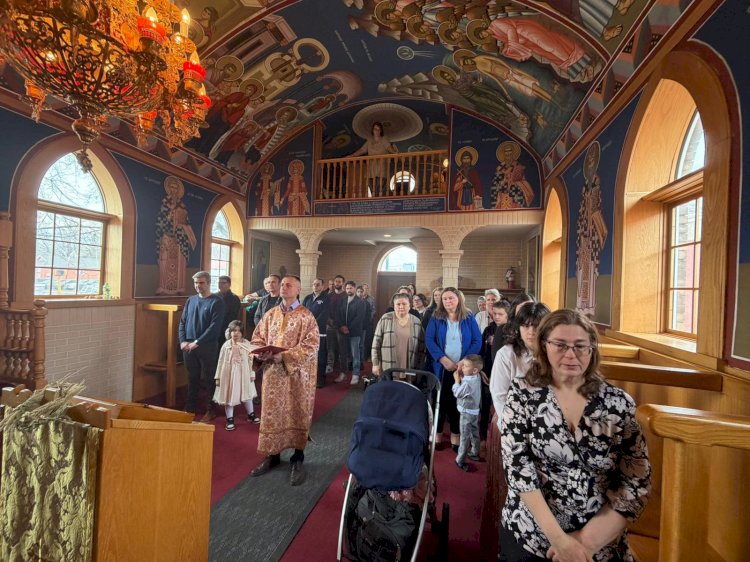
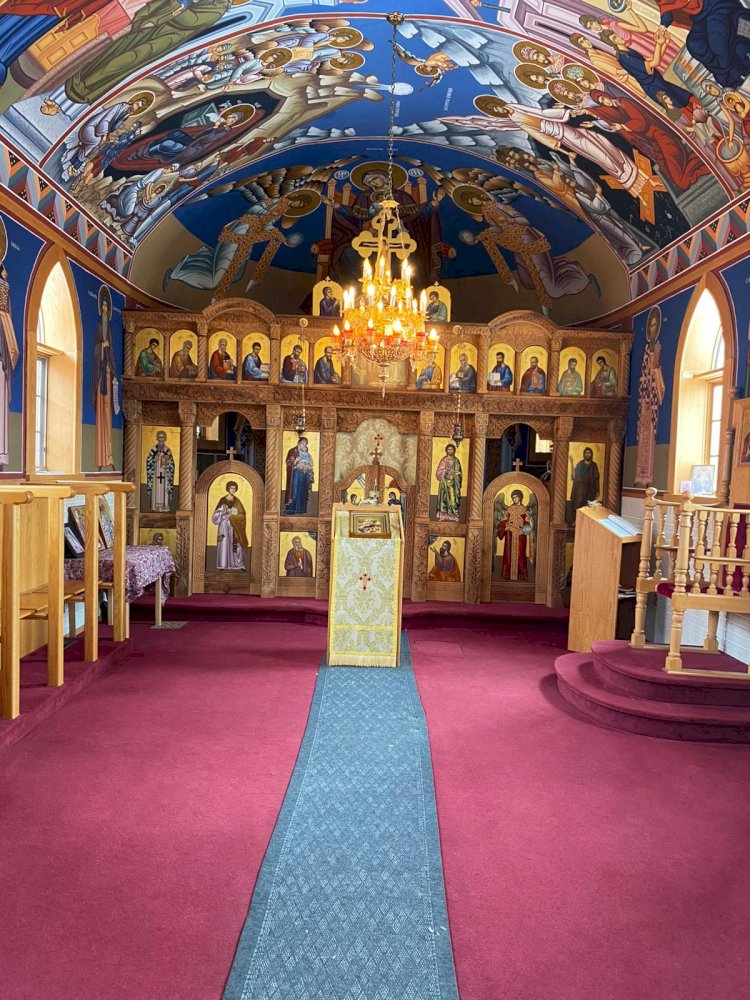
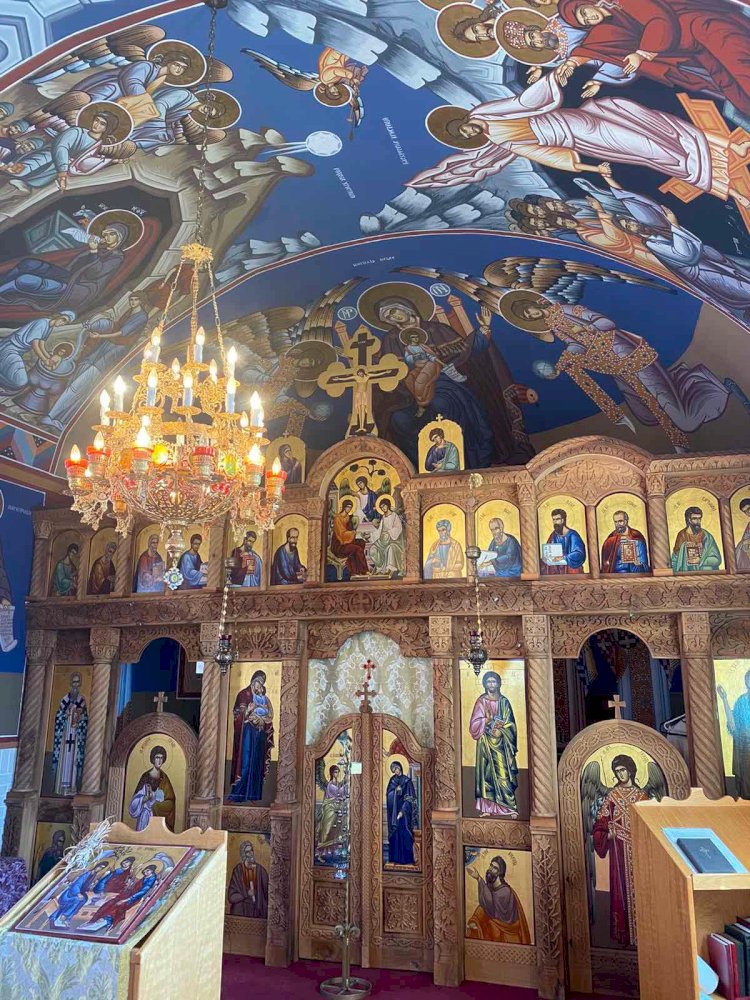
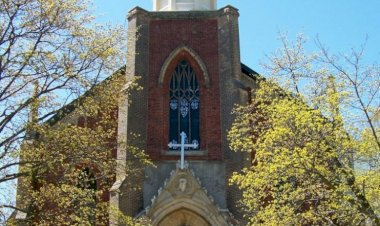
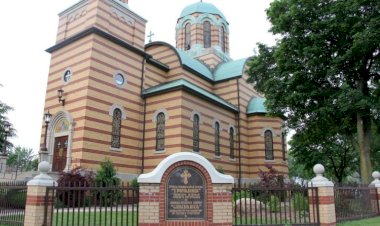
A year that will also be remembered is 1991 when the celebration of the seventy-fifth anniversary of the existence and work of the church in Regina was held. On August 3 and 4, 1991, this jubilee was celebrated together with six Serbian bishops from the diaspora: Metropolitan of Midwestern America Christopher, Bishop of Western America Hrizostom, Bishop of Eastern America Mitrofan, Bishop of Australia and New Zealand Longin, Bishop of Britain and Scandinavia Dositej, and the host, Bishop of Canada Georgije. The ceremony was attended by faithful from almost all the colonies of the diocese, including a large number of priests, and the guests of Regina for this occasion were Crown Prince Alexander Karadjordjevic and Princess Katherine. Even before the celebration, the idea of renovating the church was raised, but the prevailing opinion of some members was that the church should remain as it is until the celebration, and that a complete renovation should be started after the celebration. The following year, in 1992, a general renovation of the church was started. During the winter, the interior renovation was carried out, from the altar and iconostasis onwards. When the Holy Altar Table was removed, it was found that no holy relics had been placed in the Table. The bishop was informed about this. The interior of the church was restored to its original appearance, the episcopal throne was made and the pews that had been placed by the descendants of the old Serbs following the example of other places of worship were removed. In the spring, work continued on the exterior of the church. A galvanized sheet metal roof was installed, the church was clad with facade brick, new windows, new stairs and a fence around the church port were installed. After the work was completed, Bishop Georgije was invited to perform the consecration of the renovated church. With the concelebration of Fr. Mirko Malinovic, the parish priest of Winnipeg Fr. Vitomir Kostic, and deacon Branko Topalovic, the bishop performed the great consecration of the church with the enthronement and the laying of the relics of the holy great martyr Prince Lazar.
The crowning glory of the restoration of the oldest Serbian church in Canada was its fresco painting. Having seen the frescoed church in Hamilton and having met the fresco painter Dragan Marunic who worked on that church, the president and vice-president of the Church and School Congregation, Dragan Salamic and Radoje Milic, invited this artist to fresco the church in Regina. Dragan Marunic worked on this God-pleasing work from February 17 to April 3, 1993. It was agreed with him that he would also make the icons for the new iconostasis in woodcut, the work of Momcilo Milosevic from Preljina near Cacak. Regardless of the small number of members of the Church and School Congregation, a lot was done for this parish during this period of time. The church, the oldest in Canada, was restored to its beauty, and conditions were created for the spiritual uplift of the church municipality. It is also worth mentioning the name of the prominent businessman Caslav Gakovic, who was a link between the old and young generations and thus played an important role in the revival of church life in Regina. He always participated in campaigns to collect aid for brothers and sisters in the new and old country. His wife Marija, who was engaged in painting and ceramics, made and donated a baptismal font to the church, and painted several paintings for the church hall as a gift. However, a period of war began in the homeland and members of the Regina municipality immediately reacted to these events. The church in Regina responded to all cries for help. In addition to the Serbs who had arrived, aid was regularly sent to the Serbian people in the affected areas.
Within the Serbian Orthodox Diocese of Canada, the name of the Regina Church and School Congregation is known to everyone precisely for the help it provided to everyone when needed. The church in Regina also became a great benefactor of the Holy Transfiguration Monastery in Milton. The work of this Church and School Congregation within the Church and national fields did not go unnoticed. This is evidenced by numerous episcopal letters awarded to this community and its members by the Bishop of Canada Georgije. At his proposal, the Holy Synod of Bishops of the Serbian Orthodox Church awarded the Holy Trinity Church and School Congregation from Regina with the Order of Saint Sava, Second Class. From February 9 to 11, 2001, Regina hosted the Diocesan Assembly for the second time and hosted over sixty representatives of all Church and School Congregations in the newly renovated church hall.
After a long illness, the parish priest of Regina, Fr. Mirko Malinovic, reposed on September 4, 2007. Under his long-standing fatherly leadership, the Serbian Orthodox community in Regina experienced a spiritual revival. His departure from this life to the arms of God brought difficult days for this parish. A new temporary priest, Fr. Arsenije Nikitovic, was appointed to the parish on November 1, 2007, and remained there until January 21, 2008. Fr. Arsenije tried to continue the work of his predecessor and spiritually elevate his flock. From February 1, 2008, Fr. Radovan Maric was appointed parish priest of Regina. Fr. Radovan continued the work of his predecessors in gathering Serbs around the Church through various spiritual and cultural events. The folklore group Zora (Dawn) was renewed, which began its work in 2008, and Lidija Spasic was appointed as the teacher of the folklore group. Saint Demetrius of Thessaloniki – Mitrovdan was chosen as the patron saint and Slava of the folklore group. A church choir was also organized at the church, which adorns the divine services with its angelic voices and takes care of the beauty and orderliness of the church. In parallel with the spiritual life of the parish, existing facilities were regularly maintained and improved. In 2008, the windows were changed and a new door was installed in the church. In 2009, an auxiliary room was built behind the church hall, and the church received a new stand for lighting candles. The following year, in 2010, the floor in the church hall was changed. The parishioners of Regina experienced great joy on October 28, 2010, when the Bishop of Canada Georgije brought an icon with the relics of Saint Bishop Nikolaj (Velimirovic) as a gift to this church. The ceremony of presenting the icon with the relics was also attended by the parish priest of Hamilton, Fr. Lazar Vukojev, who delivered a divinely inspired homily on this occasion. Since June 1, 2012, the Church and School Congregation has also owned a house with two apartments on Winnipeg Street.
In 2016, on the centennial anniversary of the founding of this parish, two significant events were held. To mark this significant anniversary, the Holy Liturgy was celebrated with a procession around the church. Bishop Georgije and five priests concelebrated the Holy Liturgy. In addition, special ceremonies were held to mark this anniversary, attended by people from all over Canada to participate in this significant moment for the church, and also for the Serbian Orthodox Diocese of Canada.
After some upheavals and crises, Regina, the oldest and smallest Serbian colony in Canada, is today battling to meet all the requirements for a permanent parish priest. The Board of Directors is making every effort to ensure that church life among the Serbs in Regina gradually takes root again.